


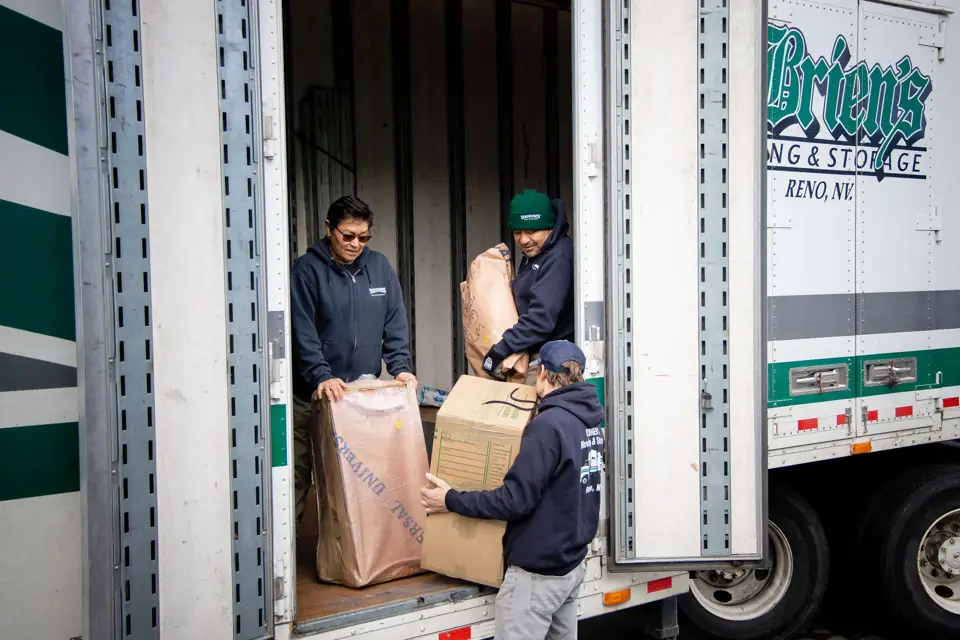
Some addresses simply cannot take a full-size moving trailer: a narrow mountain road, a low bridge, a dense block with no turning room. The answer is a second, smaller truck that shuttles loads back and forth to the big one.
Why a shuttle is used
A road-haul trailer needs room to approach and room to turn. Where the road does not allow it, the crew parks the large unit at the nearest safe place and loads a smaller truck at your door. The smaller truck makes one trip after another, transferring goods until the load is complete.
At delivery the process runs in reverse, which adds time and labor to both ends of a move.

The federal frame
FMCSA's booklet defines impracticable operations as conditions that make it physically impossible to pick up or deliver with normal road-haul equipment, so specialized equipment or added labor is needed. A mover may require additional charges for such services even if you did not request them, and the tariff names the services involved.
At delivery, the mover may collect impracticable operations charges only up to 15 percent of all other charges due, and bills the rest afterward.
What to tell your estimator
Photos and a map pin help, and a conversation about access is more useful than a guess.
- Street width, grade and turning room near the house
- Overhead lines, low branches or bridges on the way in
- Gates, HOA rules and truck length limits
- Seasonal road limits at higher elevations
Shuttles in the O'Brien's service area
Northern Nevada and the Sierra have plenty of steep and narrow approaches, from Tahoe shoreline lanes to older Reno blocks. The O'Brien's estimator looks at the access during the in-home visit and puts any shuttle on the itemized estimate, so the charge is part of the number you see first.
If a shuttle looks likely, ask whether closer truck parking can be arranged. Call 775-359-6683, Monday to Friday, 8 am to 5 pm.