





A closet is the most personal storage space in the home, and it hides more than most people expect. Gift boxes, luggage, old files and winter gear all end up on the shelf above the rod. Packing from the top down keeps the work orderly and the new closet easy to refill.
Clear the shelf
Start at the top. Boxes on the shelf, hat boxes, luggage and bins come down first, and each one is a decision. Keep, give away or toss before it goes in a carton.
Empty suitcases can be used for packing, as long as you do not exceed a weight you can lift. Fill luggage with soft items such as linens and towels.

Fold, stack and label
Folded sweaters, jeans and tees go flat in small or medium cartons. Keep stacks by family member and by season, and label each carton on two sides. The full folding method is in how to pack clothes.
Keep an easy-to-open carton for the first week's clothes. It rides with you or goes on the truck last, so it comes off first.
Hanging clothes
Move hanging clothes from the rod to a wardrobe box in handfuls. Group them the way they hang now, and the new closet takes five minutes to fill.
Delicate dresses and suits do better in a garment bag, and a wardrobe box keeps them upright. A small piece of tape across the hangers stops them sliding together on the rail.
Shoes, belts and accessories
The floor of the closet usually holds shoes, bags and boots. Use the pairing method from how to pack shoes, and put handbags stuffed with paper into a medium carton so they hold their shape.
Ties and belts roll up and fit in a shoe box. Jewelry stays with you; how to pack jewelry explains the sorting.
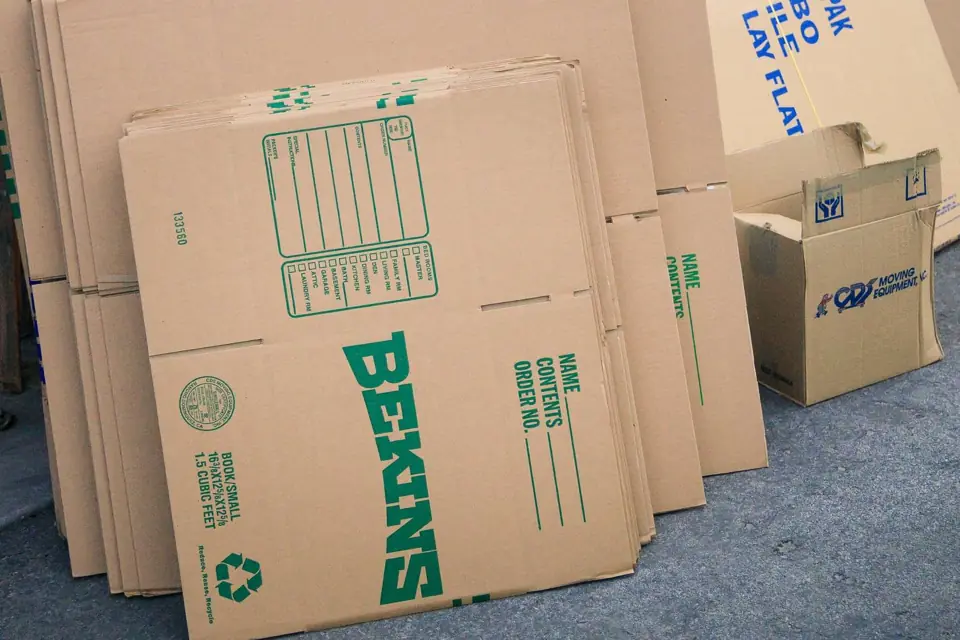
Closet organizers and shelving
Wire shelves, hanging organizers and rods can often stay. If they are part of the house, leave them. If they are yours, remove the brackets and tape the pieces together with the screws bagged and attached.
When closets are the biggest part of the job, partial packing lets the crew pack wardrobes while you handle the rest.