



Local movers think in hours. Long-distance movers think in pounds. That single difference explains why a long-distance estimate asks about every closet, the garage and the storage shed, and why the weight on the final bill can differ from the weight on the estimate.
Where the weight comes from
For a non-binding estimate, the mover must weigh the shipment before assessing charges, and the weighing must be done on a certified scale. Federal rules allow two methods. In an origin weigh, the truck is weighed empty and again after loading, and the difference is your shipment. In a back weigh, the loaded truck is weighed and then weighed again after it has been unloaded. Pads, dollies and equipment must be on the truck for both weighings and the fuel tanks must be full, so the difference reflects only your belongings.
If the estimate was given by volume, the mover must put the conversion from volume to weight in writing for you.

Your rights at the scale
You may be present at each weighing. If you tell the mover you do not want to observe, you give up that right for the first weighing. After the mover tells you the billing weight and the total charges, and before unloading begins on an origin weigh, you may demand a reweigh. The mover cannot charge for the reweigh, and the freight bill is then based on the reweigh weight, even if it is higher.
Every weighing produces a weight ticket signed by the weigh master, showing the scale's name and location, the date, tare, gross and net weights, the vehicle and the shipment number. A copy of the weight tickets must come with the freight bill.
Estimate type and what you pay at delivery
With a binding estimate the price for the listed goods and services is fixed in advance, so the weight on the scale does not change the total. With a non-binding estimate the final charge follows actual weight, but on collect-on-delivery shipments the mover must hand over your goods if you pay at least 110 percent of the estimate, and bills the rest after 30 days. The binding and non-binding estimates guide covers the difference in detail.
Distance, services and timing
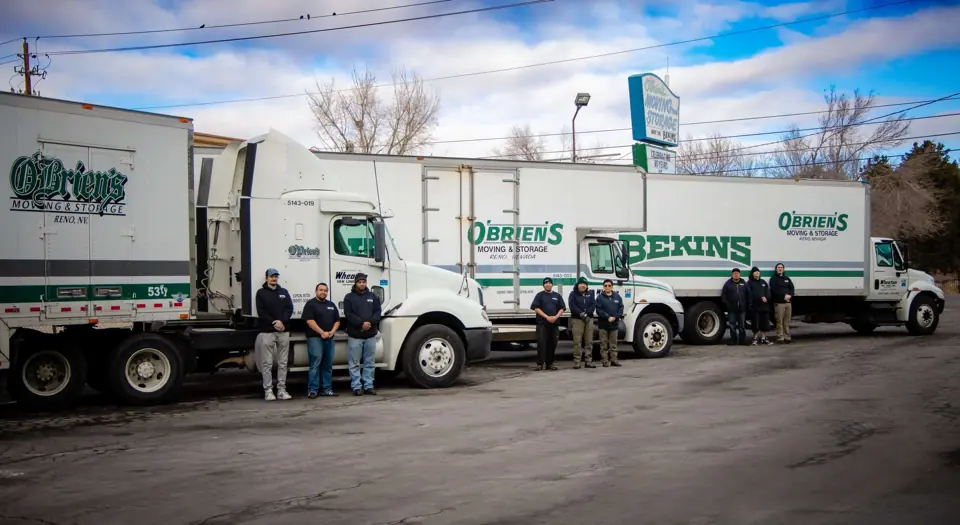
Beyond weight, the tariff considers the distance between origin and destination. Services at either end add to the shipment: packing, appliance preparation, a shuttle when a big truck cannot reach a street, and storage. When O'Brien's handles the Reno end of a Bekins move, destination services, storage in Sparks and delivery can be added to the plan. See long-distance moving and how interstate moves work for the whole process.
Your delivery window comes from your written estimate and bill of lading; ask the office what applies to your route.

Ways to keep the weight accurate
- Show the estimator everything, including the garage, attic, shed and anything you plan to buy before the move.
- Decide what you will not take before the survey, because every item you remove lowers the weight.
- Hold back items you will carry yourself, such as documents, medicines and valuables.
- Ask for the weight tickets and compare them with the freight bill.
- Use the inventory builder to list your belongings room by room before the estimator visits.