



A safe is the heaviest single object in many homes, and the weight sits low and to one side, which makes it easy to tip. Most of the work in moving one happens before anyone lifts: measuring the path, checking the floor, and emptying the contents. This guide explains how safes are moved and how the firearms inside are handled on a move between homes or states.
Empty it before anything else
A safe moves with nothing in it. The contents add weight, shift when the safe tilts, and in the case of firearms and ammunition they are governed by transport rules that apply to people, not to the furniture. Remove the firearms, ammunition, documents and valuables, and carry those yourself in your own vehicle.
Take a photo of the inside and note the combination or key location in a safe place that is not with the safe. If the safe has an electronic lock, replace the battery before the move so it opens on the other end.
How firearms travel
Federal law at 18 U.S.C. 926A protects the interstate transport of a firearm from a place where you may legally possess it to another such place, provided the firearm is unloaded and neither the firearm nor the ammunition is readily accessible from the passenger area of the vehicle. A locked case in the trunk is the usual way to meet that wording. The ATF publishes plain-language guidance on firearm transport.
State and city rules differ, and they can be stricter at the destination. If you are moving between Nevada and California, check the California Department of Justice firearms pages before you cross the line, and keep any purchase or registration papers with the firearms.
Measure the route
- Measure the safe, then measure every doorway, hallway turn and stair on the way out.
- Check the floor surface, because hardwood and tile can crack or scratch under a loaded dolly. Plywood runners spread the load.
- Note how many steps there are and whether the stairs turn. A safe on stairs needs more people and the right equipment.
- Check the new location too. A safe on an upper floor needs a floor rated for the weight, and a concrete garage slab is the easiest place to set one down.
Equipment that does the job
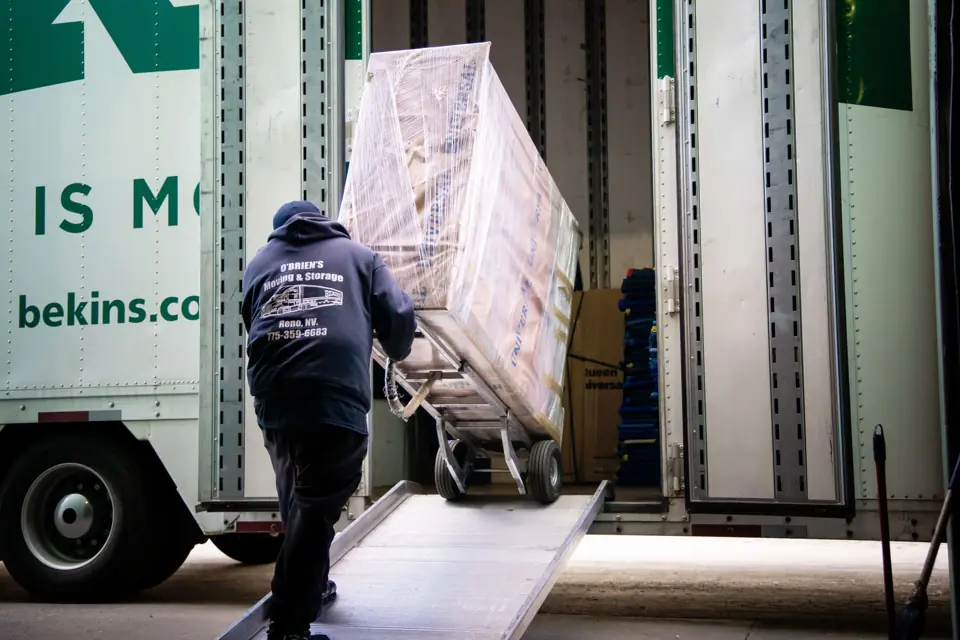
Crews use a heavy-duty dolly rated for the weight, a ramp for steps, straps that hold the safe to the dolly, and blankets to protect the safe and the doorframes. Stair-climbing hand trucks and a hand-operated lift help on stairs. Nobody should walk a safe down steps by hand. If the safe is bolted to the floor or wall, the bolts come out first and the bolt holes are filled afterward if you wish.
Keep the safe upright. Laying a safe on its side can damage the lock mechanism and the fire lining, so check the maker's instructions before it leaves its upright position.

Put it on the paperwork
Whoever moves the safe needs its weight and its dimensions in advance. Read the safe's label or manual, or look up the model. On a move that goes through an estimate, the safe belongs on the written inventory, and the estimator needs to see the route in person. See what movers will not move for the general list of items that people carry themselves, and the moving inventory for how the paperwork works.
Federal rules for household goods moves in 49 CFR Part 375 describe the written estimate and inventory that apply to interstate moves.
Setting it in the new home
Place the safe against a wall or in a corner before you load it, so it is harder to tip or pry. Level it, anchor it to the slab if the maker provides anchor holes, and wait until it is anchored before you put the contents back.